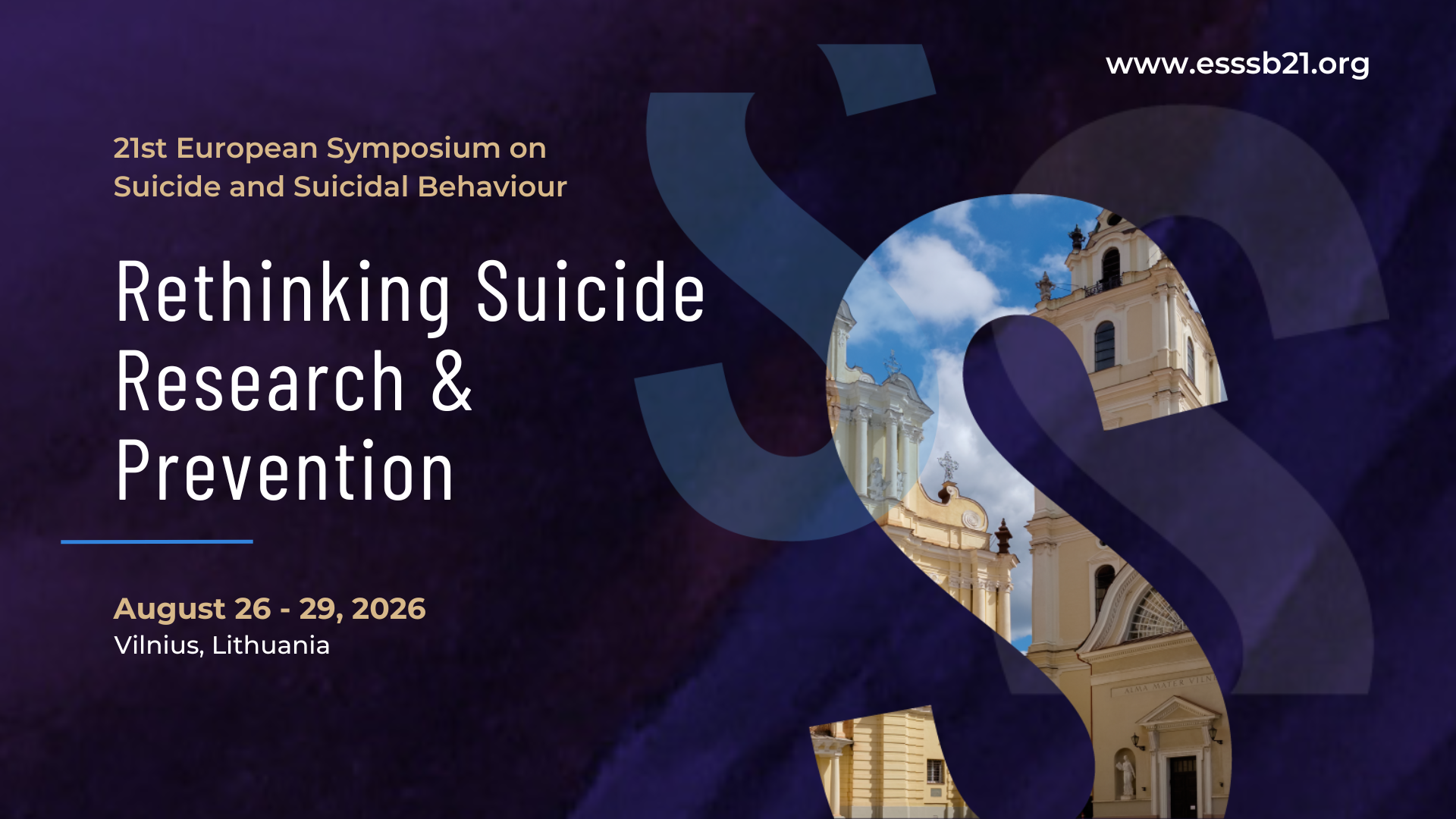
ESSSB 2026 Conference – 21st European Symposium on Suicide and Suicidal Behaviour

The ESSSB 2026 Conference – 21st European Symposium on Suicide and Suicidal Behaviour will commence on 26th August 2026 in Vilnius. It is the largest European conference dedicated to suicidology and suicide prevention, held biennially and attracting psychologists, psychiatrists, and professionals from related disciplines.


One of the organisers of the upcoming edition is Przemysław Waszak, M.D., Ph.D. from the Department of Hygiene and Epidemiology at the Medical University of Gdańsk.


The symposium will feature presentations by researchers from leading universities in, among others, Australia, the Netherlands, the United States, the United Kingdom and Ukraine.

grafika


Further information on the conference, abstract submission, and participation is available at:
https://www.esssb21.org/


Kalendarium tło

ESSSB 2026 Conference – 21st European Symposium on Suicide and Suicidal Behaviour

Radisson Blu Hotel Lietuva, Vilnius

35th Congress of the European Society of Hypertension “Innovations in Cardiometabolic Management”

The annual European Society of Hypertension (ESH) Congress is the leading event in Europe bringing together experts focused on hypertension and cardiovascular diseases. The Gdańsk edition is expected to attract over 3,000 participants.
The central theme of this year’s congress focuses on innovations in cardiometabolic management, addressing both current challenges and key advances in the field. The scientific programme reflects the interests of researchers developing novel therapeutic approaches and advanced diagnostic methods, as well as clinicians and healthcare professionals committed to improving the quality of everyday clinical care


Event website:
https://eshannualmeetings.eu/


Kalendarium tło

35th Congress of the European Society of Hypertension

AMBEREXPO Exhibition and Congress Centre ul. Żaglowa 11, Gdańsk

5th scientific conference An Interdisciplinary Perspective on Health Sciences in the memory of Prof. Piotr Lass held in conjunction with the 20th anniversary of the Faculty of Health Sciences

The Dean of the Faculty of Health Sciences, Prof. Przemysław Rutkowski, together with the organising committee, cordially invites you to a unique event combining several major academic initiatives: the 5th Scientific Conference An Interdisciplinary Perspective on Health Sciences in memory of Prof. Piotr Lass, the 20th anniversary of the Faculty of Health Sciences of the Medical University of Gdańsk, the Congress of Deans of Faculties of Health Sciences, and the 6th Congress of Maritime, Tropical and Hyperbaric Medicine of the Institute of Maritime and Tropical Medicine, MUG.


The event will take place on 14th–15 May 2026 at the Prof. Zdzisław Kieturakis Auditorium, located in the Invasive Medicine Centre of the University Clinical Centre in Gdańsk.


Additional information
• Registration and abstract submission are conducted online in accordance with the information provided on the conference website. 
• Abstract submission deadline: 20th April 2026

Kalendarium tło

5th scientific conference An Interdisciplinary Perspective on Health Sciences in the memory of Prof. Piotr Lass held in conjunction with the 20th anniversary of the Faculty of Health Sciences

Prof. Zdzisław Kieturakis Auditorium ul. M. Smoluchowskiego 17, Invasive Medicine Centre (IMC), University Clinical Centre, Gdańsk

Undiagnosed Day 2026 – Where Diagnosis Becomes Hope: The Power of Collaboration and Technology in Rare Diseases

How can we shorten the path to diagnosing rare diseases? The answer lies in collaboration, data, and technology.


We invite you to participate in the conference Undiagnosed Day 2026 – Where Diagnosis Becomes Hope: The Power of Collaboration and Technology in Rare Diseases, which will take place on 30th April 2026 at the Prof. Zdzisław Kieturakis Auditorium in the Invasive Medicine Centre of the University Clinical Centre.


The event will focus on contemporary diagnostic challenges in the field of rare and undiagnosed diseases, with particular emphasis on the importance of cross-sector collaboration, advanced diagnostic technologies, data sharing, and the coordination of clinical, scientific and systemic efforts.


The conference is organised by the Wilhelm Foundation, ERDERA, and the Centre for Rare Diseases at the Medical University of Gdańsk in cooperation with the University Clinical Centre.


🔹 Event website:
https://erdera.org/event/undiagnosed-day-2026/


🔹 Mandatory registration
https://forms.office.com/pages/responsepage.aspx?id=p8acuKdXN0GCJGnn6gscVcxOj66Q6ThOhxqPVeOBfaxUOUtTQ1hWUDNTNVNQUUJORENSSUdETEdSMiQlQCN0PWcu&route=shorturl


Kalendarium tło

Undiagnosed Day 2026 – Where Diagnosis Becomes Hope: The Power of Collaboration and Technology in Rare Diseases

Prof. Zdzisław Kieturakis Auditorium, ul. M. Smoluchowskiego 17, Invasive Medicine Centre (IMC), University Clinical Centre

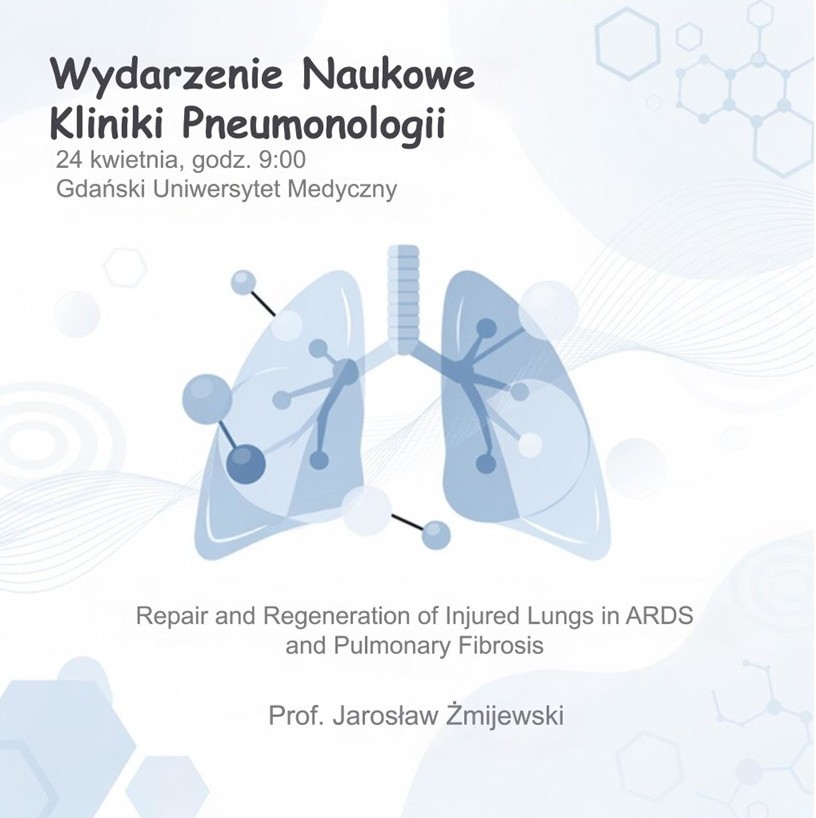
Lecture: Repair and Regeneration of Injured Lungs in ARDS and Pulmonary Fibrosis

This interdisciplinary meeting will focus on issues related to acute respiratory distress syndrome (ARDS) and pulmonary fibrosis, with particular emphasis on the mechanisms of lung injury, repair, and tissue regeneration.


The lecture entitled Repair and Regeneration of Injured Lungs in ARDS and Pulmonary Fibrosis will be delivered by Prof. Jarosław Żmijewski.
 

plakat
Kalendarium tło

Lecture: Repair and Regeneration of Injured Lungs in ARDS and Pulmonary Fibrosis

Endoscopy and Minimally Invasive Techniques Simulation Laboratory, Medical University of Gdańsk
09 00

Supporting Structures

Supporting Structures

Supporting Structures

The strength of the Medical University of Gdańsk is its modern research and clinical infrastructure (headed by the University Clinical Centre). The university additionally establishes structures supporting science and knowledge transfer, which are a key element currently building a new quality of science at the Medical University of Gdańsk.

These structures constitute the foundation for the development of science at the Medical University of Gdańsk and are a pillar of activities undertaken by the University as part of the Excellence Initiative – Research University programme with the overarching goal of the program, which is: to improve the quality of scientific activity and the level of education quality, and consequently, raise theinternational significance of the university’s activities.

The new structures supporting research activity at the Medical University of Gdańsk created in the framework of the Excellence Initiative – Research University program:


Centre of Biostatistics and Bioinformatics Analysis

The Centre of Biostatistics and Bioinformatics Analysis offers a wide range of services related to the broadly understood biostatistical and bioinformatic analysis as well as big data analysis. The activity profile includes mainly support for projects based on high-throughput DNA and RNA sequencing (including single cell analysis), as well as other scientific initiatives that require processing of large amounts of data. Additionally, the activities of the Centre will include the use of artificial intelligence in the processing of imaging data and the classification of patient samples. One of the key initiatives of the unit is the Biostatistics Clinic, offering MUG employees and doctoral students the opportunity to discuss the optimal approach to statistical data analysis. The Centre of Biostatistics and Bioinformatics Analysis will provide researchers with professional support at every stage of research, from designing the measurement methodology, through data acquisition and analysis, to the final interpretation.


Bioanalytical Laboratory

As part of the Initiative of Excellence – Research University Program at the Medical University of Gdańsk, a new core facility is being created – the Bioanalytical Laboratory, whose main goal will be to cooperate with research teams of the MUG and the UCC by supporting the process of scientific research and clinical trials in the field of analytics and bioanalysis, especially in the context of Priority Areas Research (oncology, cardiology and cardiovascular medicine as well as biochemistry, genetics and molecular biology). The Centre will employ analysts and bioanalysts, whose work will strengthen the interdisciplinary nature of research, development and implementation work carried out at the MUG and will enable the implementation of the above projects by external entities.


Excellence of Scientific Publications Unit

The scientific potential of the Medical University of Gdańsk is over a thousand researchers and over three hundred doctoral students, active in publications fields in the national and international scientific circuit. The Excellence of Scientific Publications Unit was established with a view to them. As part of it, we offer comprehensive support in the field of communication of research results, in particular at various stages of preparation of scientific publications in English.


Early Clinical Trials Centre

The activity of ECTC is aimed at conducting clinical research at the early stage of developing innovative therapies, especially in Priority Research Areas of the Medical University of Gdańsk, as defined in the Excellence Initiative – Research University Program. These scientific studies evaluate the safety and efficacy of therapies in numerous therapeutic areas, specifically oncology, hematology, cardiology, neurology and connective tissue diseases. Phase I/II studies at ECTC include first-in-human designs with dose escalation, drug interactions, food interactions, cardiovascular safety, close monitoring of pharmacokinetics/pharmacodynamics, among others.


Translational Brain Diseases Centre

The Translational Brain Diseases Centre of the Fahrenheit Union of Universities is another university-wide unit on the map of initiatives supported under the Excellence Initiative – Research University program. It was established to make the most of MUG’s scientific and research potential in neuroscience.


The structures established at the Medical University of Gdańsk to implement new pro-development activities also supported under the Initiative of Excellence – Research University program include:
 

Translational Medicine Centre

In order to achieve innovative interdisciplinary projects focused on personalised medicine, MUG has established the Translational Medicine Centre in 2019. Tasks are fulfilled in the Centre through the application of the concept of translational medicine, which is understood as the method of the fast transfer of knowledge gained in an experiment to the daily clinical practice.

Early Clinical Trials Unit

Early Clinical Trials Unit (ECTU) is a structure established by MUG in 2019 with direct involvement of UCC. Because of ECTU, it is possible to complete clinical research on innovative drugs.

Clinical Research Support Centre

The objectives of establishing the CRSC in years 2021-2026 are to consolidate activities aimed at developing a path increasing the quality of clinical trials and increasing the availability of patients to new therapies and treatment regimens.

International Research Agenda of the Medical University of Gdańsk and the University of Uppsala, Sweden

To improve the international status of its research, MUG has intensified an effort on creating Centres of Scientific Excellence in its structures. An example of this activity is the International Research Agenda (IRA) established in 2018. It is a joint intercollegiate unit of MUG and the University of Uppsala, focusing on research on genetic aberrations acquired during a lifetime as a risk factor of cancer and other diseases. This unit was established owing to funds donated by the Foundation for Polish Science within the program of the International Research Agenda (IRA).

Tri-City University Animal House – Research Service Centre

The Tri-City Academic Laboratory Animal Centre is currently one of the most modern facilities of this type in Poland and is an innovative base that allows for world-class research on animals. TAZD – CBU GUMed covers an area of ​​1100 m2, within which there are two separate passages behind a sanitary and hygienic barrier with 14 rooms for laboratory animals, used for breeding and keeping them, as well as for performing treatments and experimental procedures; quarantine; treatment rooms and utility facilities along with a fully automated washing room and sterilization room.

Interdepartmental Laboratory for In Vivo Research

The unit was established thanks to the initiative of one of the coordinators of Research Team V: In vivo studies on mechanism of disease and therapy in PRA 3, and represents a synergistic collaboration of experienced scientists from the Departments that make up the laboratory. Due to the interdisciplinary nature of the unit, collaboration with the In Vivo Research Laboratory allows for the planning and execution of specialized in vivo studies and analyses from different areas of experimental medicine during a single research project or preclinical trial.

Central Biobank

The expanding collections of biological material can pose a challenge for their inventory and management. That is why we offer consulting assistance in matters of freezing mapping as well as organizing and electronic recording of the collected sample collections. An organized electronic sample register will facilitate collection management and enable quick and precise location of each sample by assigning them to a specific position in a box, rack, freezer shelf and freezer.

Platform of Imaging and Omics Analysis at the Department of Laboratory Medical Diagnostics – BioBank of the Medical University of Gdańsk

BioBank of the Department of Laboratory Medical Diagnostics (DLMD) at MUG is a unique structure of highly specialised laboratories with a biorepository adapted to translational research in a large scale. BioBank MUG is a strategic nodal biobank of the Consortium of Polish Biobank Network (PBN) BBMRI.PL, which operates under the patronage of the Ministry of Science and Higher Education. BBMRI.PL is a member of the European Network of Biobanks: Biobanking and BioMolecular Recourses Research Infrastructure (BBMRI-ERIC.EU) – the largest European scientific biomedical organization (European Research Infrastructure Consortium; ERIC).

Technology Transfer Office

The intellectual property (IP) policy of MUG focuses on creating and disseminating knowledge and the optimization of benefits from the use of intellectual rights. The essential units at the University in the process of technology transfer and commercialization of intellectual property are the Technology Transfer Office (TTO) and the special purpose company of GUMed, Centre of Medical Innovations Ltd. (CMI Ltd.).

Researchers Support Centre Office

The MUG is an efficient university relying on high organisational culture, supported by modern management methods. One of the assumptions of the “Initiative of Excellence – Research University” Program at the Medical University of Gdańsk is to increase the effectiveness of scientific research by reducing the administrative burden on researchers. The MUG’s unit implementing the assumptions of the IDUB Program in this area is the “Researchers Support Centre” Office, on the basis of which the Centre for Service Excellence will be established in the future.

About HR Excellence in Research

About HR Excellence in Research

HR Excellence Logo

Human Resources Strategy for Researchers (HRS4R)


The HR Strategy for Researchers (HRS4R) exists to support research institutions in implementing the principles of the European Charter for Researchers and the Code of Conduct for the Recruitment of Researchers into their daily practices and internal policies.

The European Charter for Researchers describes the rights and obligations to which researchers and the institutions that employ them are subject, while the Code of Conduct for the Recruitment of Researchers contains rules for the recruitment of researchers that employer institutions should follow to ensure equal treatment for researchers recruited in Europe.

The Medical University of Gdańsk has been awarded the HR Strategy distinction and the HR Excellence in Research symbol. The European Commission certificate was awarded on 30 August 2024.

The implementation of the principles from the Charter and Code by research institutions makes them more attractive to researchers looking for a new employer or host for their research project, and promotes units in national and international grant competitions.

Institutions that effectively implement all the principles of the Charter and the Code are awarded the HR Excellence in Research Award by the European Commission, which highlights the commitment to implementing fair and transparent procedures for recruiting and evaluating researchers.

The assumptions of the HR Strategy for Scientists are described in detail on the European Commission’s website.

The aim of the European HR strategy is, therefore, to continuously improve the employment and recruitment conditions of researchers in research centres, and institutions that effectively implement the principles of the Charter and the Code are awarded the HR Excellence in Research label by the European Commission.

Obtaining the HR Certificate is of crucial importance for the Medical University of Gdańsk. The introduction of standards related to the recruitment of researchers according to the HR Excellence for Research model will increase the prestige of the university as a scientific institution, creating the best working conditions for researchers in the implementation of research and development activities. MUG joining the distinguished institutions will have a real impact on the daily work, comfort and development of the scientific community and the improvement of working conditions at our University – explains Prof. Michał Markuszewski, Vice-Rector for Science (2020-2024), currently the Rector of the Medical University of Gdańsk, heading the project team.

Why is this so important to us?

As part of the implementation of Objective 4 of the Excellence Initiative – Research University Program entitled Preparation and implementation of comprehensive solutions for the professional development of the University’s staff, especially young researchers, the University wants to shape the development of researchers so that they can create valuable scientific content, have time for consultation, networking, collaboration with other researchers and celebrating successes. In addition, the implementation of activities aimed at achieving European certification is planned as one of the goals of the MUG Strategy for 2019-2025.

In addition to the certification itself, the initiatives we are undertaking include nurturing the image of a friendly employer and increasing the attractiveness of employment for both academic and administrative staff. The European Commission promotes the awarded institutions among scientists and international organisations as those that provide the best working and development conditions for rsearchers – adds Prof. M. Markuszewski.

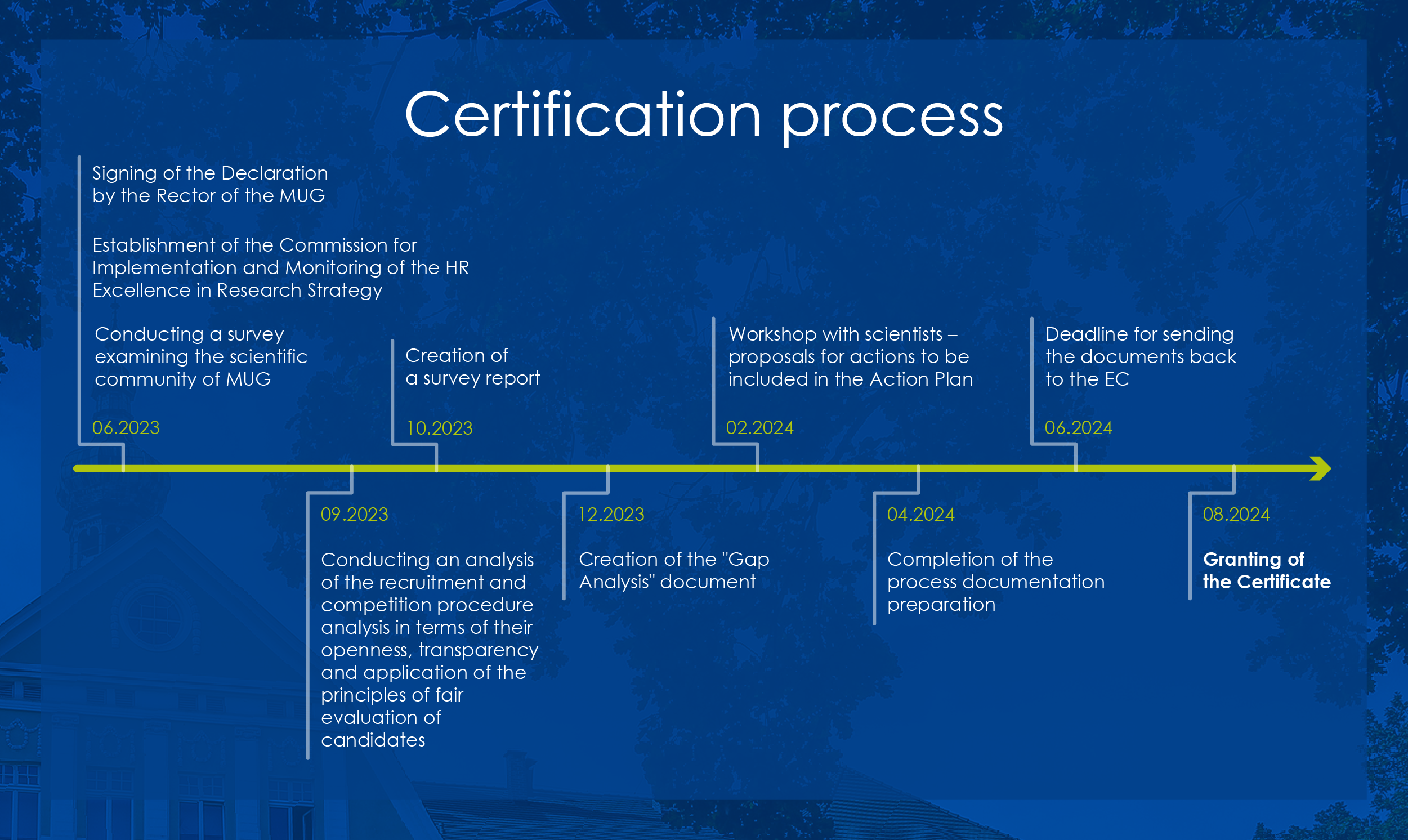
Certification process timeline for MUG’s HR Excellence: 06.2023 declaration & commission; 09.2023 recruitment-procedure analysis; 10.2023 survey report; 12.2023 ‘Gap Analysis’; 02.2024 workshops and Action Plan proposals; 04.2024 documentation prepared; 06.2024 documents sent to EC; 08.2024 granting of the Certificate.

HR Excellence in Research

HR Excellence in Research

HR Excellence Logo

About HR Excellence in Research

The HR Strategy for Researchers (HRS4R) exists to support research institutions in implementing the principles of the European Charter for Researchers and the Code of Conduct for the Recruitment of Researchers into their daily practices and internal policies.

The European Charter for Researchers describes the rights and obligations to which researchers and the institutions that employ them are subject, while the Code of Conduct for the Recruitment of Researchers contains rules for the recruitment of researchers that employer institutions should follow to ensure equal treatment for researchers recruited in Europe.

HRS4R team at MUG

Meet the HRS4R team at the Medical University of Gdańsk.

prof. dr hab. Michał Markuszewski

Certification efforts

Description of actions required to obtain the HR Excellence in Research certificate.

Documents

Collection of documents related to the HR Excellence in Research initiative.

Internal regulations

Set of internal regulations aimed at obtaining the European HR Excellence in Research certificate.

Knowledge base

Find out what you should know about the HR Excellence in Research initiative.

Dział Rekrutacji i Rozwoju Pracowników


Telefon - numer telefonu (+48) 58 349 18 78
Email - adres email hrexcellence@gumed.edu.pl
Lokalizacja - adres ul. M. Skłodowskiej-Curie 3a
80-211 Gdańsk

CA22127 – COllaboratively DEveloped culturallY Appropriate and Inclusive Assessment Tool for Palliative Care EDUcation, (CODE-YAA@PC-EDU) Meeting in Gdańsk

We are pleased to invite you to the open sessions of the CODE-YAA COST Action meeting, hosted by the Department of Palliative Medicine at the Medical University of Gdańsk.

This meeting offers a unique opportunity to learn more about an international initiative focused on developing quality indicators for palliative care education. Participants will be introduced to project updates, innovative research methods, and available grant opportunities, as well as possibilities for international collaboration.

CODE-YAA is a COST Action bringing together researchers and innovators from 28 countries, dedicated to strengthening cooperation and advancing excellence in palliative care education across Europe.

To find out more, please visit the project and COST Association websites:

https://codeyaa.eu/
https://www.cost.eu/actions/CA22127/


CODE-YAA meeting will be held at the Medical University of Gdańsk, Poland, on 4 February 2026, from 9:00–10:30 AM (CET).
To join the meeting online, please click the following link https://teams.microsoft.com/meet/32149444230870?p=a6TYmntn1xfGisJkBJ

Programme


09:00 – 09:15
Welcome and Opening Remarks
Prof. Piret Paal
Prof. Monika Lichodziejewska-Niemierko
09:15 – 09:30
Palliative Care in Poland: The Gdańsk Model of Education in Palliative Medicine
Prof. Monika Lichodziejewska-Niemierko
09:30 – 09:50
CODE-YAA@PC-EDU COST Action – Objectives, Updates, and Potential Practical Implications
Prof. Piret Paal, Dr Minna Hökkä 
09:50 – 10:10
Overview of the CODE-YAA@PC-EDU Project Research Findings (Main Results of the Reviews and Delphi Process)
Dr Anna Pedrosa Carrasco, Dr Stephen Mason, Dr Tania Pastrana 
10:10 – 10:25
Available Grant Programmes and Funding Opportunities
Dr Leszek Pawłowski 
10:25 – 10:30
Announcement of the Winner of the CODE-YAA Influencer Award
Prof. Piret Paal, Dr Minna Hökkä

Kalendarium tło

CA22127 – COllaboratively DEveloped culturallY Appropriate and Inclusive Assessment Tool for Palliative Care EDUcation, (CODE-YAA@PC-EDU) Meeting in Gdańsk

Prof. Zdzisław Kieturakis Auditorium and online
10 09 30 00

3rd Annual AGILE Meeting Conference

The early detection of lung cancer using thoracic CT has been widely demonstrated in multiple international trials to objectively increase cure rates. Now the international focus is on effective and economical implementation. Increasingly, it is emerging that thoracic CT screening is also detecting a range of early tobacco-related diseases including cardiovascular disease and chronic obstructive pulmonary disease. These three diseases comprise the ‘BIG3’, as they collectively account for close to half of the premature deaths globally. Thoracic CT screening presents a unique opportunity to integrate care for this high risk cohort with a single imaging examination. We plan to develop optimized protocols for evaluation of these major diseases, explore challenges and define solutions in enabling implementation, especially for economically disadvantaged countries across the world. A core strategy in achieving this ambitious goal is to leverage the use of AI processes across the continuum of care, including its use for risk assessment, disease detection and managing disease interventions.

Kalendarium tło

3rd Annual AGILE Meeting Conference

PATRONAT INSTYTUCJONALNY
University Clinical Center (UCC) and online